
Describe risks in a way that supports a decision
A useful information security risk describes what could happen, what important asset or objective would be affected and what the consequence would be. Entries such as “cyber attack” or “data breach” are often too broad to support meaningful treatment because they do not explain the scenario or the business impact.
Risk descriptions do not need to become essays. They need enough context for another manager to understand why the risk matters and what treatment would change its likelihood or impact. A consistent structure also makes later review and reporting easier.
If nobody can explain or act on a risk entry, adding it to the register has not improved security. Prioritise decision quality and ownership.
Use scoring as a prioritisation tool, not false precision
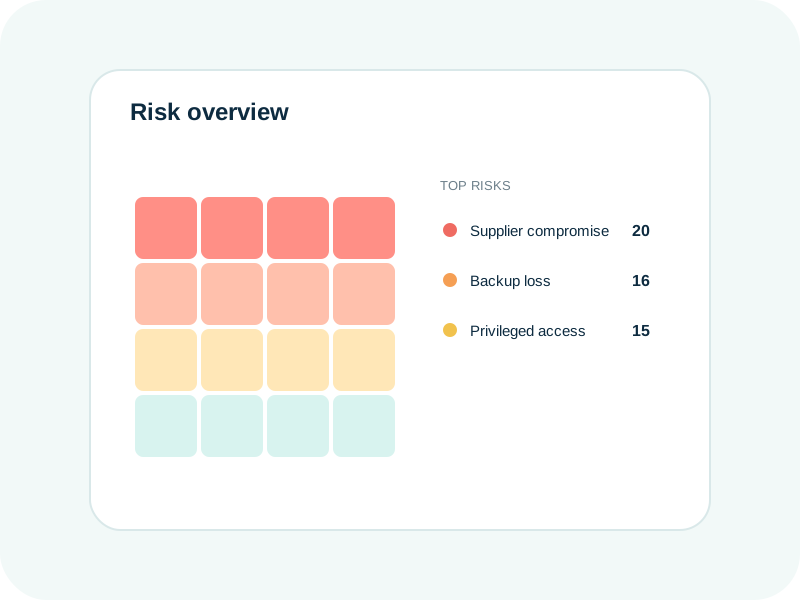
Most organisations use likelihood and impact scales to establish inherent and residual risk. The exact mathematics matter less than consistent definitions. If “high impact” means something different to every reviewer, the resulting heat map can look authoritative while hiding subjective decisions.
Document the scoring method, include the assumptions that materially affect the assessment and give risk owners enough guidance to apply the method consistently. Where a risk is accepted, record who accepted it and why the residual exposure is within appetite.
Connect treatment to controls and evidence
The risk register should not stop at a treatment statement such as “mitigate”. The treatment should identify actions and controls that reduce the risk, along with ownership and target dates. Once implemented, evidence should help demonstrate that those controls are actually operating.
That connection is what turns risk management into a living part of the ISMS. When a control fails, evidence expires or a system changes, the related risk can be reviewed with context rather than rediscovered from scratch.
Make this easier to manage in OrcaComply
OrcaComply keeps the decisions, owners, documents, controls and evidence behind your ISMS connected so the work is easier to manage and easier to explain.
Explore risk & controls →